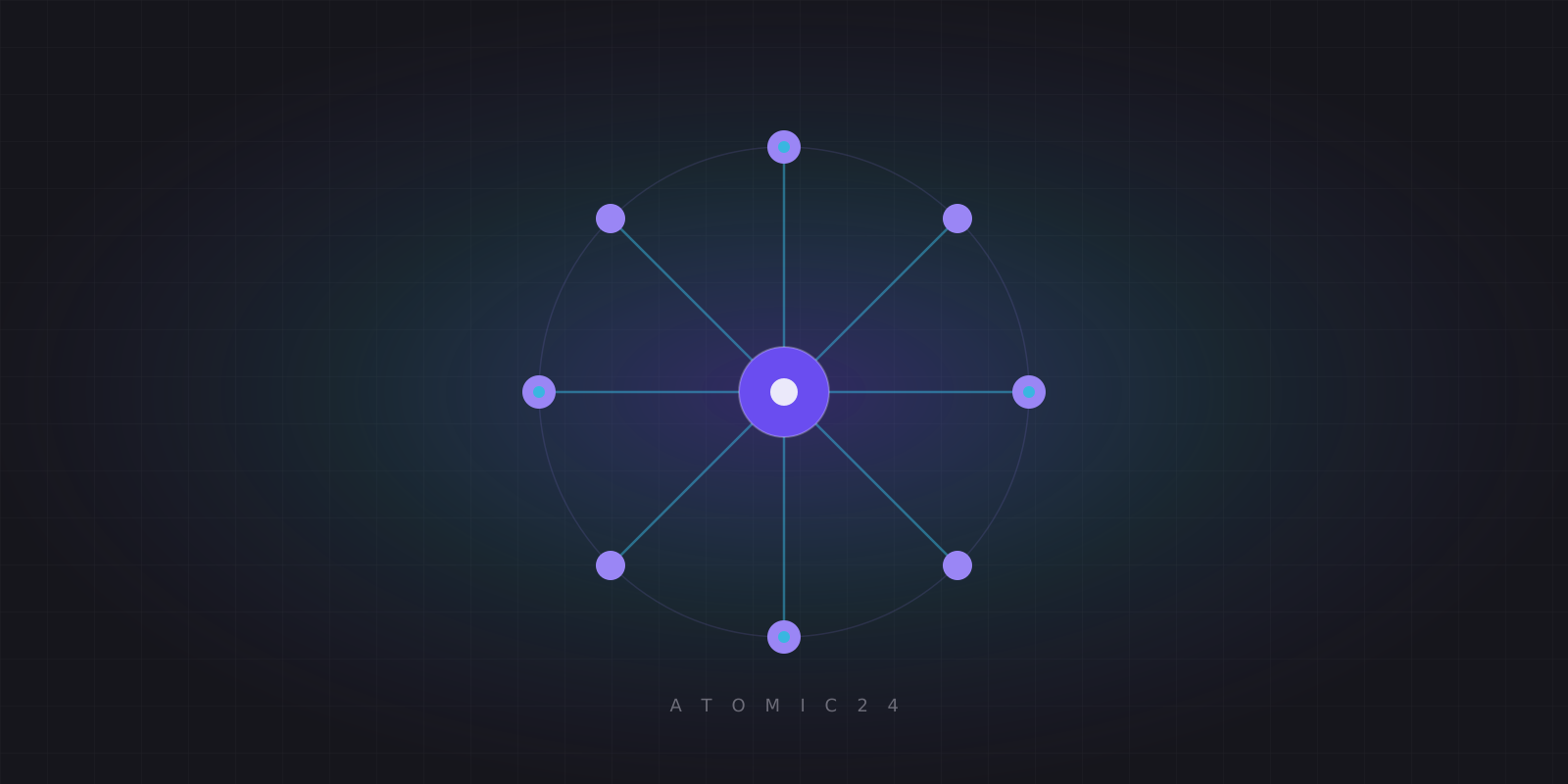
Most studios scale by adding people. We scale by adding agents.
Atomic24 is one human — direction, taste, and the final call on what ships — and a fleet of specialized AI agents that do the building, shipping, and running. It's not a gimmick or a future plan. It's how every atom we put live actually gets made.
Here's the honest version of how that works.
The fleet has roles, not headcount
We don't run one general-purpose AI and hope. The work is split into roles, the same way a small team would split it:
- Researcher — finds small, real, underserved problems and pressure-tests whether anyone actually wants the thing.
- Builder — writes and ships the code for each atom.
- Designer — turns the product into a clean, on-brand interface.
- Writer — drafts the copy, the docs, and build logs like this one.
- Ops — deploys, monitors, and keeps every atom running around the clock.
- QA — tests, catches regressions, and guards the quality bar.
Each role has a narrow job and a clear definition of done. Narrow scope is what makes agents reliable — the same reason narrow products are.
One human sets direction. The fleet does the work. Nothing ships without a human saying yes.
The human is the bottleneck on purpose
The constraint isn't compute. It's judgment. An agent can draft ten landing pages before lunch; it can't decide which problem is worth solving or which claim we can stand behind. So the human stays firmly in the loop on the decisions that compound: what to build, what to kill, what to promise.
That division is the whole model. Agents remove the cost of doing. The founder keeps the cost of deciding — because that's the part that shouldn't be cheap.
Why this lets us run 24/7
A person sleeps. A fleet doesn't. Monitoring, deploys, content, and research run while the founder is offline, then surface a short list of decisions to make in the morning. That's how a portfolio of small products stays always on without a team to match — the leverage is in the layer doing the work, not the layer making the calls.
It cuts both ways, and we know it: "the agents did it" only earns trust if the output is good. So we lead with outcomes — does the atom work, is it useful, does it run — and let the method speak for itself. The AI isn't the pitch. The shipped, running product is.
This is the part of Atomic24 we'll keep writing about: not the hype, but the actual mechanics of building this way — what works, what breaks, and what we change next.